Stoneware
Tess Parisi


General Information
Stoneware is a dense ceramic fired at high temperatures. It is non-porous and is very durable. It resembles stone, giving it its name. It came about after earthenware but requires higher temperatures which turn the glazes on the outside to a glass like finish. Stoneware can be made in many colors and can even have combinations of colors. It is very versatile and can be anything from a decorative pot to plates and bowls. It was first found in the Western part of Europe in the late 1600s. The earliest production of it in America began on the East coast in the 1720s.
Environmental Impact
The environmental impact of all ceramics is generally low and not harmful to the environment. This is through the sustainable use of natural materials and abundance of it yet the production process is the harmful portion.
It takes a lot of heat to produce ceramics, especially stoneware since it is fired at a much higher temperature to make it so durable and waterproof. This is the only negative to the production and use of stoneware since it is very strong and lasts a very long time.
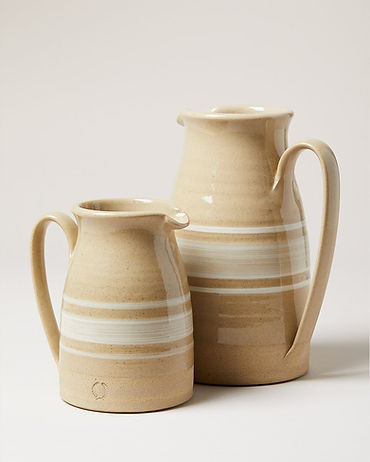

Use in Interior Setting
1. This interior has stoneware as a decorative wall tile in a bathroom, since it is sturdy, very difficult to break, and waterproof.
2. This tea pot is stoneware since it is very resistant to heat and can be used very often wit little damage.
3. These grey plates are very durable and are coated with a smooth finish to give them a good look and feel while also being incredibly strong.
4. Stoneware can also be made into detailed flower vases since it is easy to mold and dries very well, yet slow, and creates a strong base as a vase or decorative item.

Cookware

Sources
1. https://www3.epa.gov/ttnchie1/ap42/ch11/final/c11s07.pdf
2. https://www.shstoneware.com/blog-what-is-stoneware/
4. https://www.shstoneware.com/blog-what-is-stoneware/#:~:text=The%20first%20examples%20of%20stoneware,Virginia%3B%20and%20New%20York%20City.
5. https://www.sciencedirect.com/topics/chemistry/stoneware