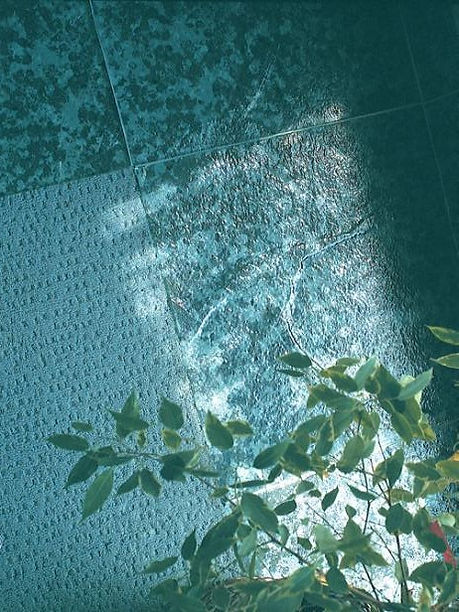
Glass Tile
Kasey Denis


General Information
Glass tiles are thin, flat-shaped tiles used to line or cover a surface. They come in a wide variety of shapes, transparencies, and colors. They can be used to make a surface more durable or water repellent or they can be used for surface decoration. Though they require more delicate handling, glass tiles are popular because they can refract light, offering a wider variety of surface effects compared to ceramic or porcelain.
Glass tiles are made from thin pieces of glass with translucent glaze fired onto the back of each tile. They’re sold either individually or in predesigned mosaic patterns set on a mesh backing. They are extremely popular though they are the most expensive mainstream backsplash material available today.
Glass tiles are low-maintenance and easy to clean. Grime and splashes are easy to wipe off with a little soapy water or an all-purpose cleaner. Also, mold and mildew don’t readily grow on glass.
Environmental Impact
Many glass tiles are made of recycled materials. Even if not, they are 100% recyclable at the end of their lifespan. They also take about half the energy required to produce ceramic tiles.
Since they are known to be non-absorptive, glass tiles are low-maintenance and easy to clean, reducing the use of harsh cleaning materials and adding another eco-friendly benefit.
Additionally, glass tile is a very strong building material that is impervious to water and is freeze and thaw resistant. Therefore, this long-lasting durability further adds to its sustainability and lowers its lifecycle costs.
Glass tile has no impact on indoor air quality.


Use in Interior Setting
The owners of this home selected a geometric-patterned glass tile backsplash by Island Stone. The glass tile keeps the space bright, and the pattern adds interest. A Completely Dysfunctional Nevada Kitchen Becomes Everyone’s Favorite Spot for Parties - Dwell
2. Large-scale glass tile lines the shower enclosure in the suite bathrooms of this cool hotel and marble surrounds continue the material theme from the lobby. Photo 8 of 9 in Head to Arkansas for What May Be America's Coolest Art and Design Hotel - Dwell
3. The blue tile in this master bath is recycled glass from China that contrasts the muted tones of the rest of the house it is featured in. https://www.dwell.com/search/glass%20tile/photos/6133486216927907840
4. The kitchen island is clad with red glass tiles that make for a retro-styled kitchen. The tiles contrast against the dark walnut cabinets.
https://www.dwell.com/search/glass%20tile/photos/6133461012784680960
5. This bathroom glows with various shades of Turkish-style glass tiles that make the bathroom pop with color and liveliness.
https://www.dwell.com/search/glass%20tile/photos/6133470085534060544

Floor Tiles
Glass tiles are typically used for walls, bathrooms, window details, or decoration. However, some glass tiles are manufactured for use as floor tiles. Glass floor tiles are often textured to prevent slippage when wet. A surprisingly practical choice, glass can be used just like any other tile and It's easy to clean. Glass tiles come in a wide variety of shapes and colors, making them attractive for both residential and commercial use.
Testing Organizations:
-
The National Glass Association
Relevant standards through ASTM:
-
C1505 - 15: Standard Test Method for Determination of Breaking Strength and Modulus of Rupture of Ceramic Tiles and Glass Tiles by Three-Point Loading
-
C373 - 18: Standard Test Methods for Determination of Water Absorption and Associated Properties by Vacuum Method for Pressed Ceramic Tiles and Glass Tiles